

Media
Invest in 2 million dollar sneakers
Those who don’t trust the stock market, don’t want to invest in steel or gold, can always choose a (second-hand!) sneaker. Because with that you can make a return of up to 149,000%, as research by DealA shows. In 2025 it is even expected to be a growth market of $6 billion.
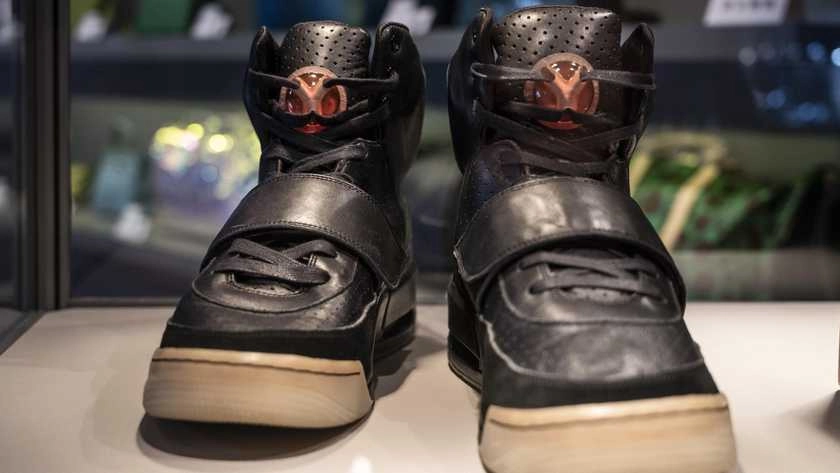
Auctioned sneakers: $2 million via Sotheby’s.
Some sneakers are so special that they can be resold for a profit immediately. For example, the retail price of the Nike Dunk SB Low Paris was $80, and these are now sold for $90,000. Or the Jordan 1 OG Bred from 1985, which had a retail price of $65 and is now worth nearly $95,000, a growth of 145,000%.
Well-known brands
Tips for investors from DealA: stick to well-known brands like Nike or Adidas. A sneaker may not seem particularly special at first, but over time can still rise significantly in value. Here too, just like on the stock exchange, patience is a proven recipe. Also, just like on the exchange, the return can ultimately disappoint because there are more of that type of shoe than expected.
Another tip is to watch the release dates of new pairs, as they’re called in this world. The sale of some sneakers is announced in advance via websites such as Sneakerjagers.
Emotional process
And keep an eye on the rest of the market: what are sneakers doing, which ones catch on? Investing, in any product, remains an emotional process. The price rises with demand. And that demand or emotion can just as easily collapse again.
Frank Klerks of Outsole says it’s a fine line: „Not every sneaker increases in value, but the Air Max 1 is almost guaranteed to be a good investment, even if it’s not necessarily about thousands of euros.” And if it’s not a good investment, you can still wear them. „That’s the great advantage of sneakers.”
 Air Max 1
 Sneakers
 Laces
Laces Sneaker Care
 Collectibles
 OUTLET