

Media
Close-up: Frank Klerks, founder of sneaker platform Outsole
Around ten years ago, Frank Klerks built Outsole into a webshop for collectors, where vintage sneakers, rare pairs and even loose laces get a second life. For Frank it has been about one model for years: the Air Max 1. Where many sneaker resellers are driven by hype and quick releases, he deliberately chose depth in a single niche. Ten years after the start of Outsole, we speak to the entrepreneur about the lessons he has learned, how he relaxes, but also about trends and the future of the second-hand (sneaker) market.
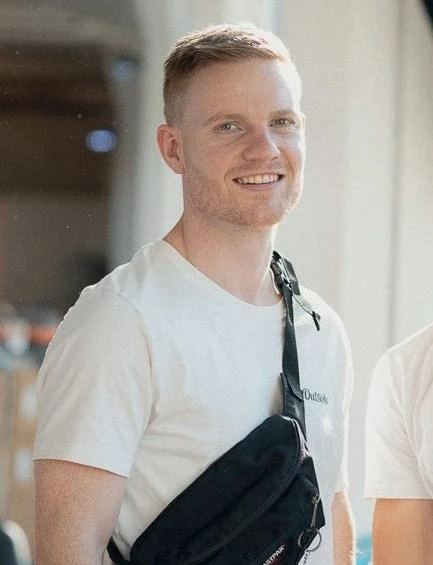
Who is Frank in 3 words?
Thinks for a moment. “An optimist, but also a realist, so things can never really disappoint. A bit of a mess as well. How does that show? Well, how doesn’t it? I’ve been on medication for it for a few years, I wish I’d done that twenty years ago… But I have to admit: chaos is order for me. I just thrive on it. I never know what I’m going to do tomorrow. Wherever I go, it turns into a mess, but I also know I always sort it out.”
And for those who don’t know Outsole, can you tell us what you do?
“Everything revolves around selling collectible sneakers, mainly the Air Max 1. Alongside that, we sell more than 2000 types of laces, both to consumers and B2B. Why mainly the Air Max 1? That’s where I feel it the most. Adidas Yeezy for example, that never really worked for me. That was a hype, and just buying whatever is on trend doesn’t feel like collecting to me. So I deliberately chose not to go along with that.”
When did your passion for shoes actually start?
“Around the age of twelve. I grew up with three brothers, and we wrecked everything that could be wrecked, including shoes. Only from my clothing allowance was I allowed to buy sneakers. From the age of 15 it became obsessive and I slowly started buying with the goal of reselling. That’s how I could fund my hobby. My parents always supported me and trusted me completely in this.”
Which track is on repeat for you right now?
“I’m not into individual tracks. If you want to make me grumpy, turn on the radio so I have to keep hearing those commercials in between. I prefer listening to sets, something rhythmic, from Hard with Style for example. Those sets last an hour and a half, it just keeps going. The continuous same rhythm gives me a certain calm.”
This shoe trend I skip…
“I skip trends in general. Although, every person is trend-sensitive, I’m wearing slightly wider trousers right now too for instance. You go along with it unconsciously. I used to want nothing to do with gold or silver, but now I wear Air Max with a gold swoosh. I leave trends to others. Boots or Uggs? No, fine if others rock them with pride, but personally a no go for me.”
Biggest misconception about working in the shoe industry?
Thinks for a moment. “Outsole gets romanticised sometimes, but actually I’m just a glorified warehouse worker packing parcels (laughs!). And the financial picture: people end up thinking you can get filthy rich from it, but we put in a lot of work and we compete with Vinted and Marktplaats, where practically no tax is paid.”
This is how I unwind…
“The only thing that really helps me unwind is working in the garden. I don’t enjoy it at all, but it helps. Sport or meditation? No, then I get too much time to think. When I’m gardening, everything has to be just right, so being busy gives me peace.”
Outsole now exists for 10 years; what is the biggest lesson you have learned in 10 years?
“If you do something out of passion, it’s easy to keep going. On top of that, I’ve learned that things always work out, I’ve had that confirmed by now. What I do want to say is that niche markets aren’t always the most fun. We can still learn a lot from other countries, where enthusiasts and collectors actually help each other; where the envy isn’t so strongly present.”
You’re talking about competition, a competitive battle?
“People get fixated on competition, especially in the collectible world. But at the same time you also strengthen each other. Even when you stand next to each other at a trade show. I’m not afraid of competition because we offer a distinctive range. The market is big enough. We won’t compete on price, that has never been our ambition. We stand for authenticity and certainty.”
The best part of your work? And the least?
“The best is that I’ve turned my hobby into my work. The least? There’s nothing terrible in there. The reason I never opened a physical shop is that you really have to be present during opening hours. An Outsole shop would only really fit in Amsterdam or Utrecht, and the travel time from Apeldoorn, where I live, isn’t an option. Theft sensitivity and even more staff is also a challenge.”
This I could eat every day…
“McDonald’s. Fast food. You make me just as happy with a Michelin-starred restaurant as with a salty cheeseburger. Yes, if you have to wake me up for something, then this.”
How do you see the future of the second-hand sneaker market?
“I think second-hand is becoming more and more normal. Just like with cars, no one bats an eye at a second-hand car. Thanks to Vinted, second-hand shoes have also become a bit more normal, and I think there will always be a market for the Air Max 1, that remains the Dutch sneaker niche.”
Finally; what would you like to give the Textilia reader to take away?
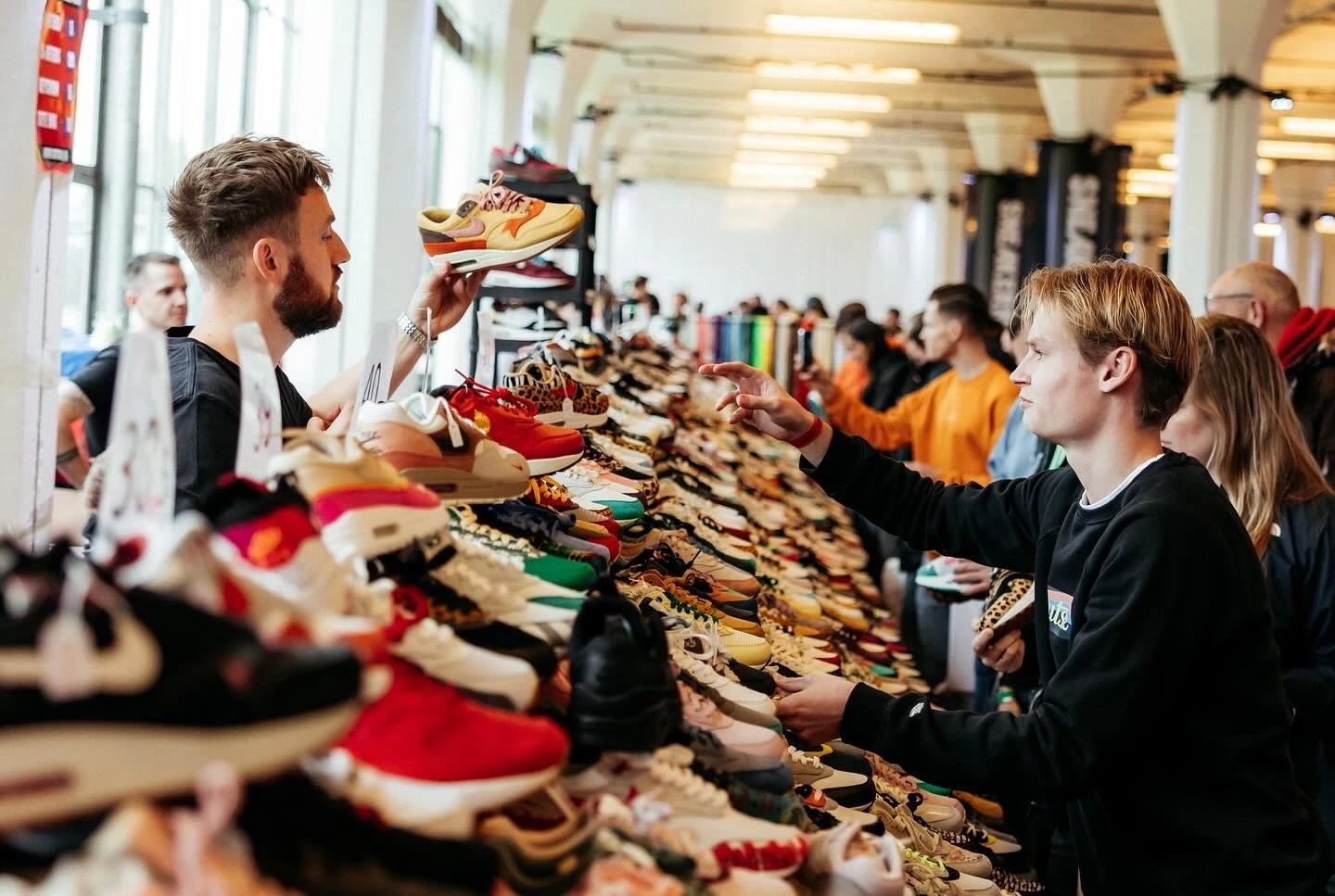
“You can read a lot from someone’s shoes and the way they’re worn. Collecting shoes often isn’t immediately understood. Especially when thousands of euros are paid for them. These sneakers are so much more than just a shoe. They are art objects and represent a piece of sneaker history. Whether that’s personal nostalgia, or an extremely limited – Hyperstrike – release that’s no longer wearable.”
 Air Max 1
 Sneakers
 Laces
Laces Sneaker Care
 Collectibles
 OUTLET